.png)


The Story Behind Mae for Pre-K
At Oak Tree Learning Center, we don’t buy off-the-shelf, cookie-cutter preschool books. Our education is powered by MAE (Meaningful Assessment-ready Experiences) for PreK - a proprietary, research-backed curriculum framework created and published by our very own founder and owner, Jennifer Carter.
Jennifer designed MAE out of empathy for and understanding of both children and preschool teachers. Coming from an academic background, she recognized a massive gap in early childhood education: teachers were constantly overwhelmed by rigid state assessment paperwork, which pulled them away from what they loved most - teaching and nurturing children.
MAE was born to solve this problem. It beautifully bridges academic rigor with the natural, fun flow of preschool life. It ensures our classrooms remain a vibrant "Healthy Learning Ecosystem", seamlessly meeting and exceeding California State Standards. Children thrive through engaging with activities that have real-world significance and connect to their daily lives.


.png)
Meet Mae
Learning by Doing. Thinking by experiencing.
To bring this curriculum to life for our students, we introduced Mae, the face of Oak Tree's curriculum! Mae represents the very spirit of our "Learning by Doing" philosophy.
Mae doesn’t sit at a desk with flashcards, and she doesn’t ask our students to do static worksheets. Instead, Mae inspires children to look at the world as an active laboratory. Through the MAE framework, children are given "something to do" that naturally demands "something to think about." Whether the children are baking an apple pie to understand mathematical measurements or organizing a canned food drive for a local shelter, Mae helps turn everyday, active experiences into powerful educational milestones.
The Core Educational Pillars of the MAE Framework

Jennifer Carter's curriculum draws on timeless educational theories to create a balanced, elite classroom environment:
Meeting Emotional Needs First (Maslow’s Foundation)
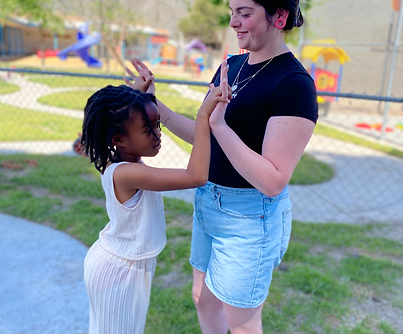
Following Abraham Maslow’s Hierarchy of Needs, MAE recognizes that a child cannot absorb academic concepts if their basic needs for safety, comfort, love, and belonging are not met.
We structure our classrooms to be a secure "second home" first, giving children the emotional stability to confidently take social and academic risks.

Authentic, Experiential Learning (Dewey’s Philosophy)
Rooted in John Dewey’s focus on experience-based learning, MAE rejects standalone, meaningless crafts.
Instead, we design monthly "Meaningful Experiences" linked to real-world tasks. For example, our students learn mathematics, language, arts and teamwork by actively planning and building an activity booth for a school festival.
Seamless State Standard Tracking
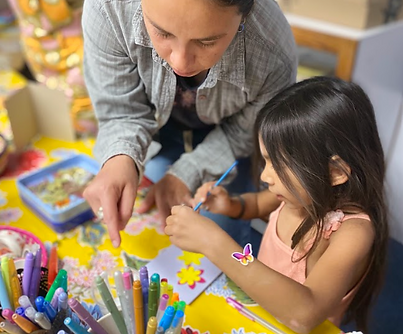
While the kids are playing and exploring, our highly trained educators are tracking their development. MAE reverse-maps and aligns directly with California’s DRDPs using a Universal Design framework.
Because these standards are embedded directly inside the hands-on activities, teachers can easily and accurately observe and celebrate developmental indicators.

How MAE Transforms the
Classroom Experience
What a traditional preschool looks like vs. what an Oak Tree MAE classroom achieves:
1. The Learning Process
Traditional Centers: Children complete rigid, repetitive worksheets to memorize letters and numbers.
The MAE Advantage at Oak Tree: Children learn letters, sight words, spelling, and counting by creating real signs, menus, and inventory logs for active classroom projects (like setting up a classroom camp or a mock marketplace).

2. Assessment
Traditional Centers: Assessment feels like an formal test that interrupts a child's natural play environment.
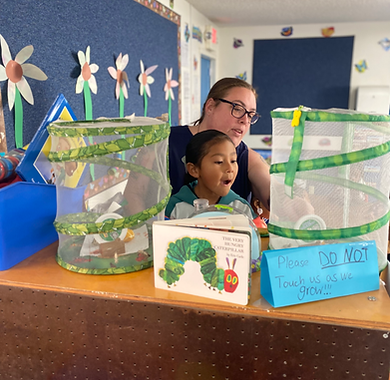
The MAE Advantage at Oak Tree: Assessment happens organically. Teachers simply use our monthly planning templates to track and document milestones as children naturally demonstrate them through play and collaboration.
3. Activities
Traditional Centers: Activities are isolated, disconnected, and forgotten by the afternoon.
The MAE Advantage at Oak Tree: Monthly themes are built around high-quality "Anchor Books" (such as Fall Mixed Up or Feast for 10), which tie literature, math, art, and science together as one continuous, engaging story.
